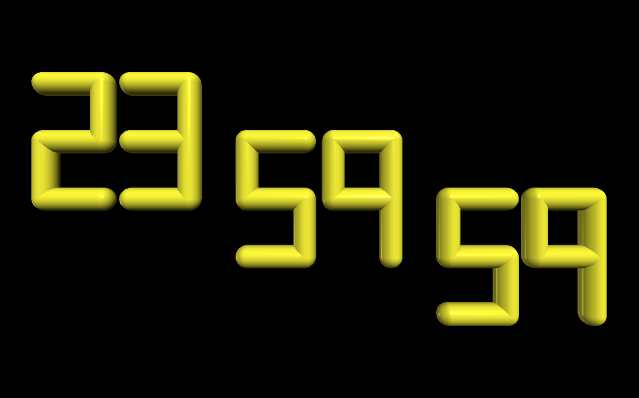
Il programma per l’orario digitale con i 7-segmenti si presta a esperimenti grafici!
Aggiungendo 6 sfere si possono coprire i buchi lasciati dai cilindri.

Le posizioni in verticale delle cifre diverse.
Orario e data.

from vpython  import *
from datetime import datetime
#----------------------------------------------------------------------------------- Parametri
C = color.yellow   # Colore dei cilindri
D = 1              # Dimensione, lunghezza, dei cilindri
R = D/5            # Raggio dei cilindri
#----------------------------------------------------------------------------------- Tutto acceso!
SETTE_SEGMENTI = [
    cylinder(pos=vector(0,2*D,0), axis=vector(1,0,0), radius=R, color=C), # 0
    cylinder(pos=vector(0,  D,0), axis=vector(0,1,0), radius=R, color=C), # 1
    cylinder(pos=vector(D,  D,0), axis=vector(0,1,0), radius=R, color=C), # 2
    cylinder(pos=vector(0,  D,0), axis=vector(1,0,0), radius=R, color=C), # 3
    cylinder(pos=vector(0,  0,0), axis=vector(0,1,0), radius=R, color=C), # 4
    cylinder(pos=vector(D,  0,0), axis=vector(0,1,0), radius=R, color=C), # 5
    cylinder(pos=vector(0,  0,0), axis=vector(1,0,0), radius=R, color=C)  # 6
]
SEI_SFERE = [
    sphere(pos=vector(0,2*D,0), radius=R, color=C), # 0
    sphere(pos=vector(D,2*D,0), radius=R, color=C), # 1
    sphere(pos=vector(0,  D,0), radius=R, color=C), # 2
    sphere(pos=vector(D,  D,0), radius=R, color=C), # 3
    sphere(pos=vector(0,  0,0), radius=R, color=C), # 4
    sphere(pos=vector(D,  0,0), radius=R, color=C), # 5
]
#----------------------------------------------------------------------------------- Mappa
VALORE_SEGMENTI = [
    [True , True , True , False, True , True , True ], # 0
    [False, False, True , False, False, True , False], # 1
    [True , False, True , True , True , False, True ], # 2
    [True , False, True , True , False, True , True ], # 3
    [False, True , True , True , False, True , False], # 4
    [True , True , False, True , False, True , True ], # 5
    [False, True , False, True , True , True , True ], # 6
    [True , False, True , False, False, True , False], # 7
    [True , True , True , True , True , True , True ], # 8
    [True , True , True , True , False, True , False]  # 9
]
VALORE_SFERE = [
    [True , True , False, False, True , True],
    [False, True , False, False, False, True],
    [True , True , True , True , True , True],
    [True , True , True , False, True , True],
    [True , True , True , False, False, True],
    [True , True , True , True , True , True],
    [True , False, True , True , True , True],
    [True , True , False, False, False, True],
    [True , True , False, False, True , True],
    [True , True , True , False, False, True]
]
#-----------------------------------------------------------------------------------
#-----------------------------------------------------------------------------------
for i in range(7):                      # Tutto spento...
    SETTE_SEGMENTI[i].visible = False
for i in range(6):
    SEI_SFERE[i].visible = False

CIFRE = []
SFERE = []
POS_X = [-4.75*D, -3.25*D, -1.25*D, 0.25*D, 2.25*D, 3.75*D,
         -6.25*D, -4.75*D, -2.75*D, -1.25*D, 0.75*D, 2.25*D, 3.75*D, 5.25*D]
POS_Y = [0.5*D, 0.5*D, 0.5*D, 0.5*D, 0.5*D, 0.5*D,
         -2.5*D, -2.5*D, -2.5*D, -2.5*D, -2.5*D, -2.5*D, -2.5*D, -2.5*D]
for i in range(14):
    sette_segmenti = []
    for j in range(7):
        segmento        = SETTE_SEGMENTI[j].clone()
        segmento.pos.x += POS_X[i]
        segmento.pos.y += POS_Y[i]
        sette_segmenti.append(segmento)
    CIFRE.append(sette_segmenti)
    sei_sfere = []
    for j in range(6):
        sfera        = SEI_SFERE[j].clone()
        sfera.pos.x += POS_X[i]
        sfera.pos.y += POS_Y[i]
        sei_sfere.append(sfera)
    SFERE.append(sei_sfere)
#----------------------------------------------------------------------------------- Funzione
def aggiorna_stato(posizione, valore):
    for segmento in range(7):
        CIFRE[posizione][segmento].visible = VALORE_SEGMENTI[valore][segmento]
    for sfera in range(6):
        SFERE[posizione][sfera].visible = VALORE_SFERE[valore][sfera]
#----------------------------------------------------------------------------------- MAIN
cifre_orario = 14*[0]
while(True):
    rate(5)
    adesso  = datetime.now()
    ore     = adesso.hour
    minuti  = adesso.minute
    secondi = adesso.second
    giorno  = adesso.day
    mese    = adesso.month
    anno    = adesso.year

    cifre_orario[0] = ore     // 10
    cifre_orario[1] = ore      % 10
    cifre_orario[2] = minuti  // 10
    cifre_orario[3] = minuti   % 10
    cifre_orario[4] = secondi // 10
    cifre_orario[5] = secondi  % 10

    cifre_orario[6] = giorno // 10
    cifre_orario[7] = giorno  % 10
    cifre_orario[8] = mese   // 10
    cifre_orario[9] = mese    % 10

    cifre_orario[10] =  anno // 1000
    cifre_orario[11] = (anno  % 1000) // 100
    cifre_orario[12] = (anno  %  100) // 10
    cifre_orario[13] =  anno  %   10

    for i in range(14):
        aggiorna_stato(i, cifre_orario[i])
Glowscript
Alcune modifiche per adattare il codice al web
Web VPython 3.2

#----------------------------------------------------------------------------------- Parametri
C = color.yellow   # Colore dei cilindri
D = 1              # Dimensione, lunghezza, dei cilindri
R = D/5            # Raggio dei cilindri
#----------------------------------------------------------------------------------- Tutto acceso!
SETTE_SEGMENTI = [
    cylinder(pos=vector(0,2*D,0), axis=vector(1,0,0), radius=R, color=C), # 0
    cylinder(pos=vector(0,  D,0), axis=vector(0,1,0), radius=R, color=C), # 1
    cylinder(pos=vector(D,  D,0), axis=vector(0,1,0), radius=R, color=C), # 2
    cylinder(pos=vector(0,  D,0), axis=vector(1,0,0), radius=R, color=C), # 3
    cylinder(pos=vector(0,  0,0), axis=vector(0,1,0), radius=R, color=C), # 4
    cylinder(pos=vector(D,  0,0), axis=vector(0,1,0), radius=R, color=C), # 5
    cylinder(pos=vector(0,  0,0), axis=vector(1,0,0), radius=R, color=C)  # 6
]
SEI_SFERE = [
    sphere(pos=vector(0,2*D,0), radius=R, color=C), # 0
    sphere(pos=vector(D,2*D,0), radius=R, color=C), # 1
    sphere(pos=vector(0,  D,0), radius=R, color=C), # 2
    sphere(pos=vector(D,  D,0), radius=R, color=C), # 3
    sphere(pos=vector(0,  0,0), radius=R, color=C), # 4
    sphere(pos=vector(D,  0,0), radius=R, color=C), # 5
]
#----------------------------------------------------------------------------------- Mappa
VALORE_SEGMENTI = [
    [True , True , True , False, True , True , True ],
    [False, False, True , False, False, True , False],
    [True , False, True , True , True , False, True ],
    [True , False, True , True , False, True , True ],
    [False, True , True , True , False, True , False],
    [True , True , False, True , False, True , True ],
    [False, True , False, True , True , True , True ],
    [True , False, True , False, False, True , False],
    [True , True , True , True , True , True , True ],
    [True , True , True , True , False, True , False]
]
VALORE_SFERE = [
    [True , True , False, False, True , True],
    [False, True , False, False, False, True],
    [True , True , True , True , True , True],
    [True , True , True , False, True , True],
    [True , True , True , False, False, True],
    [True , True , True , True , True , True],
    [True , False, True , True , True , True],
    [True , True , False, False, False, True],
    [True , True , False, False, True , True],
    [True , True , True , False, False, True]
]
#-----------------------------------------------------------------------------------
#-----------------------------------------------------------------------------------
for i in range(7):                      # Tutto spento...
    SETTE_SEGMENTI[i].visible = False
for i in range(6):
    SEI_SFERE[i].visible = False

CIFRE = []
SFERE = []
POS_X = [-4.75*D, -3.25*D, -1.25*D, 0.25*D, 2.25*D, 3.75*D,
         -6.25*D, -4.75*D, -2.75*D, -1.25*D, 0.75*D, 2.25*D, 3.75*D, 5.25*D]
POS_Y = [0.5*D, 0.5*D, 0.5*D, 0.5*D, 0.5*D, 0.5*D,
         -2.5*D, -2.5*D, -2.5*D, -2.5*D, -2.5*D, -2.5*D, -2.5*D, -2.5*D]
for i in range(14):
    sette_segmenti = []
    for j in range(7):
        segmento        = SETTE_SEGMENTI[j].clone()
        segmento.pos.x += POS_X[i]
        segmento.pos.y += POS_Y[i]
        sette_segmenti.append(segmento)
    CIFRE.append(sette_segmenti)
    sei_sfere = []
    for j in range(6):
        sfera        = SEI_SFERE[j].clone()
        sfera.pos.x += POS_X[i]
        sfera.pos.y += POS_Y[i]
        sei_sfere.append(sfera)
    SFERE.append(sei_sfere)
#----------------------------------------------------------------------------------- Funzione
def aggiorna_stato(posizione, valore):
    for segmento in range(7):
        CIFRE[posizione][segmento].visible = VALORE_SEGMENTI[valore][segmento]
    for sfera in range(6):
        SFERE[posizione][sfera].visible = VALORE_SFERE[valore][sfera]
#----------------------------------------------------------------------------------- MAIN
cifre_orario = [0,0,0,0,0,0,0,0,0,0,0,0,0,0]
while(True):
    rate(5)
    adesso    = Date()
    secondi   = adesso.getSeconds()
    minuti    = adesso.getMinutes()
    ore       = adesso.getHours()
    giorno    = adesso.getDate()
    mese      = adesso.getMonth()+1
    anno      = adesso.getFullYear()

    cifre_orario[0] = ore//10
    cifre_orario[1] = ore % 10
    cifre_orario[2] = minuti//10
    cifre_orario[3] = minuti % 10
    cifre_orario[4] = secondi//10
    cifre_orario[5] = secondi % 10

    cifre_orario[6] = giorno//10
    cifre_orario[7] = giorno % 10
    cifre_orario[8] = mese//10
    cifre_orario[9] = mese % 10

    cifre_orario[10] = anno//1000
    cifre_orario[11] = (anno % 1000)//100
    cifre_orario[12] = (anno % 100)//10
    cifre_orario[13] = anno % 10

    for i in range(14):
        aggiorna_stato(i, cifre_orario[i])
Ulteriori variazioni
Il raggio dei cilindri e delle sfere più piccolo

Le sfere di colore diverso, il raggio dei cilindri più piccolo
